A specialized FiveM host is a hosting provider designed specifically to meet the unique technical demands of running multiplayer Grand Theft Auto V modifications through the FiveM framework. Unlike generic game server hosts, specialized providers deliver optimized infrastructure, pre-configured environments, and native compatibility with FiveM’s custom resource system, onesync, and addon vehicles—ensuring stable, low-latency roleplay experiences for communities of any size.
Why FiveM Requires Specialized Hosting Infrastructure
FiveM servers operate fundamentally differently from vanilla game servers. The framework modifies GTA V’s client-server architecture to support custom scripts, mods, vehicles, maps, and roleplay frameworks such as ESX, QBCore, or QBOX. These features demand significantly more CPU thread performance, memory bandwidth, and I/O throughput than standard game hosting can reliably provide.
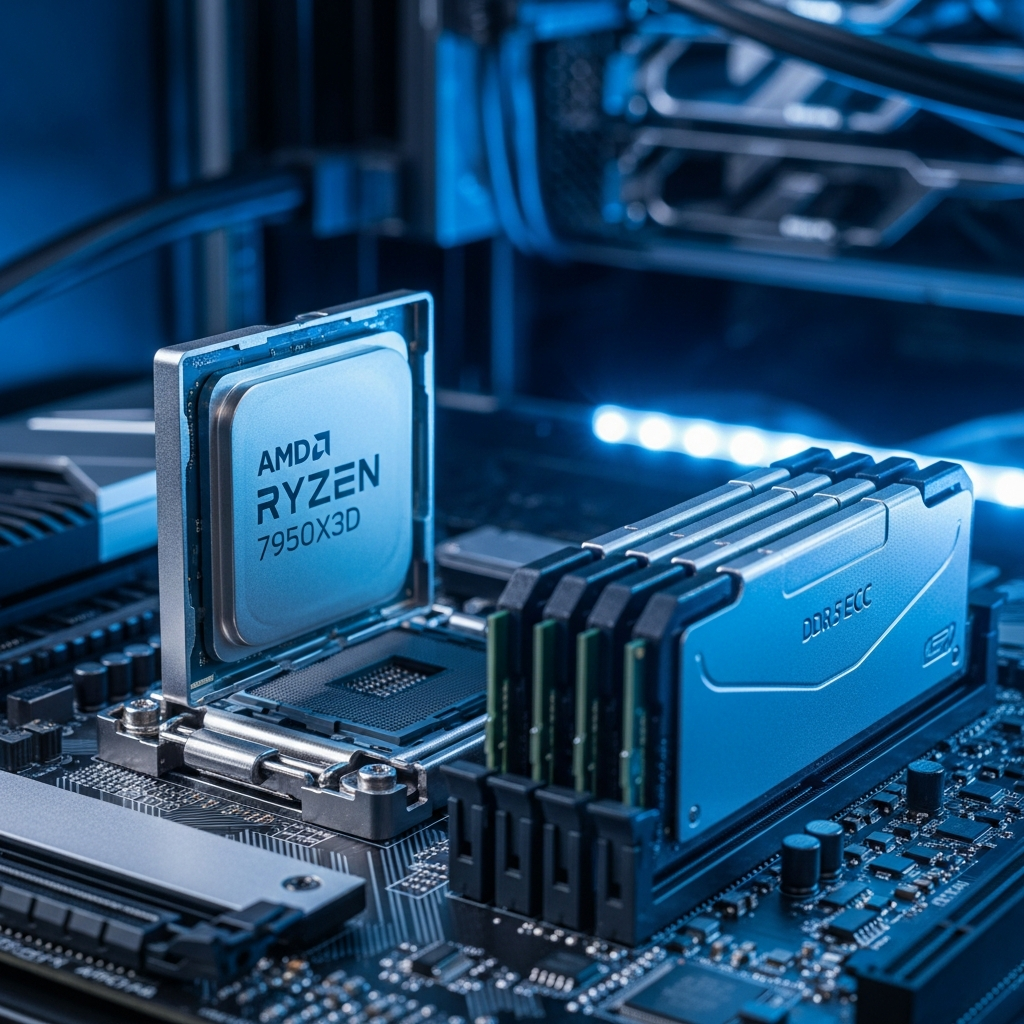
A specialized FiveM host addresses these challenges with purpose-built infrastructure. At Nexus Games, every FiveM server runs on AMD Ryzen 9 7950X3D processors clocked up to 5 GHz with 16 cores and 32 threads. This CPU architecture features AMD’s 3D V-Cache technology, which dramatically improves single-thread performance—critical for executing LUA scripts, AI pathfinding, and synchronization operations that FiveM servers rely on.
Memory is equally vital. FiveM servers with large custom maps, high-resolution vehicle addons, and extensive MLOs (Map Load Objects) can consume 8–16 GB of RAM or more during peak hours. Specialized hosts provision DDR5 ECC RAM ranging from 32 GB to 128 GB per node, ensuring error correction, stability, and headroom for sudden player influx or script-heavy events.
Storage performance directly impacts load times, database queries, and server startup speeds. NVMe SSD storage with read speeds exceeding 5000 MB/s eliminates bottlenecks when the server loads hundreds of resource files, enabling players to connect faster and reducing stutter during gameplay.
Network infrastructure is another differentiator. FiveM servers are vulnerable to DDoS attacks and require low-latency routing to serve players across North America, Europe, and beyond. Specialized hosts deploy 1 Gbps dedicated bandwidth with Game Anti-DDoS protection, filtering malicious traffic before it reaches the game server process.
Essential Features of a Specialized FiveM Host in 2025
When evaluating whether a provider qualifies as a specialized FiveM host, several core features distinguish true experts from general hosting resellers.
1. Patreon Key Inclusion and txAdmin Integration
All FiveM servers require a valid Patreon key to unlock onesync, support for more than 32 players, and advanced server features. A specialized host includes this key automatically in every plan—at Nexus Games, the Patreon key is bundled from $2.94/month, eliminating manual configuration steps.
Additionally, native support for txAdmin, FiveM’s official server management panel, is mandatory. txAdmin provides one-click updates, resource management, player moderation tools, and live console access. Specialized hosts pre-install and pre-configure txAdmin, allowing server owners to launch roleplay communities within minutes rather than hours.
2. Resource and Script Optimization
FiveM servers depend on custom resources written in LUA, C#, or JavaScript. Poorly optimized scripts can tank server performance, causing frame drops, desync, and crashes. A specialized host provides:
- Real-time resource monitoring through the Nexus Games panel, displaying CPU usage per resource.
- Script profiling tools to identify performance hogs before they impact players.
- Automatic database query optimization for frameworks like ESX or QBCore that rely on MySQL/MariaDB.
These features enable server administrators to maintain stable tick rates (30 Hz minimum) even during high-player events or intensive script executions such as vehicle spawning, banking transactions, or police chases.
3. Instant Setup and One-Click Modpacks
A specialized FiveM host removes technical barriers to entry. At Nexus Games, the control panel supports one-click installation of popular frameworks:
- ESX Legacy: Pre-configured roleplay framework with jobs, banking, inventory, and society systems.
- QBCore: Modern framework optimized for performance and modular resource architecture.
- QBOX: Next-generation framework built on Overextended’s ox_lib for cutting-edge roleplay servers.
Server owners select their desired framework during checkout, and the server is deployed fully configured within 2–5 minutes. This eliminates manual file uploads, database creation, and configuration file editing—common pain points for first-time server administrators.
4. Scalability and Dedicated Resources
Unlike shared hosting, where multiple game servers compete for the same CPU cores and RAM, specialized FiveM hosts allocate dedicated KVM-based resources. This virtualization technology guarantees that your server’s allocated CPU threads, RAM, and disk IOPS are never affected by neighboring servers.
Nexus Games uses KVM virtualization across all VPS and game server plans, ensuring consistent performance during peak hours. If your community grows from 32 players to 128+, you can seamlessly upgrade CPU and RAM allocations without migration or downtime.

How Specialized Hosting Improves FiveM Server Performance
Performance in FiveM is measured by server tick rate, client FPS stability, and synchronization accuracy. Each metric directly correlates with hosting infrastructure quality.
Tick Rate and CPU Thread Performance
FiveM servers aim for a 30 Hz tick rate (updating game state 30 times per second). Achieving this consistently under load requires a CPU with high single-thread performance. The Ryzen 9 7950X3D’s 5 GHz boost clock and 96 MB of 3D V-Cache ensure that server ticks remain stable even when processing:
- Hundreds of simultaneous vehicle physics calculations.
- Player position synchronization using onesync.
- Database queries for inventory, banking, or job systems.
- Event-driven script triggers (e.g., police callouts, heists, faction wars).
Specialized hosts monitor tick rate in real time, alerting administrators when performance degrades below thresholds—often caused by resource leaks or misconfigured scripts.
Latency and Network Optimization
FiveM relies on UDP packets for real-time synchronization. High latency or packet loss causes desync, where players see different versions of the game state. Specialized hosts mitigate this through:
- Low-latency routing: Direct peering with major ISPs in North America and Europe.
- Jitter reduction: Network hardware optimized for consistent packet delivery times.
- Anti-DDoS filtering: Layer 7 protection specifically calibrated for FiveM’s UDP traffic patterns.
At Nexus Games, FiveM servers are deployed across geographically distributed data centers, allowing communities to select the location closest to their primary player base—typically resulting in sub-30ms ping for regional players.
Database Performance and I/O Operations
Most FiveM roleplay servers use MySQL or MariaDB to store player data, vehicle ownership, inventory, and economy balances. Slow database queries cause noticeable in-game delays—players waiting 3–5 seconds to open an inventory or purchase items.
Specialized hosts optimize database performance by:
- Running MariaDB 10.11+ on the same NVMe storage as the game server files.
- Pre-configuring connection pooling and query caching.
- Providing database profiling tools within the control panel to identify slow queries.
This ensures that database operations complete in under 50ms, maintaining immersive gameplay without artificial loading screens or delays.
Choosing the Right Specialized FiveM Host: Technical Checklist
Not all providers claiming “FiveM hosting” deliver specialized infrastructure. Use this checklist to evaluate true specialization:
| Feature | Specialized Host | Generic Host |
| CPU Architecture | Ryzen 9 7950X3D / 5 GHz+ | Shared Xeon / <3 GHz |
| RAM Type | DDR5 ECC 32–128 GB | DDR4 8–16 GB |
| Storage | NVMe Gen4 SSD | SATA SSD / HDD |
| Patreon Key | Included automatically | Manual purchase required |
| txAdmin | Pre-installed & configured | Manual setup required |
| Resource Monitoring | Real-time per-resource CPU/RAM tracking | Global server metrics only |
| DDoS Protection | Game-specific UDP filtering | Generic TCP/HTTP filtering |
| Scalability | KVM virtualization, instant upgrades | Shared resources, migration required |
Providers meeting all criteria in the “Specialized Host” column are equipped to handle serious FiveM communities. At Nexus Games, every plan from $2.94/month includes these features as standard, alongside 24/7 expert support familiar with FiveM troubleshooting, script conflicts, and performance tuning.
For advanced use cases—dedicated development servers, multi-server networks, or custom API integrations—consider a Linux VPS or Windows VPS with KVM virtualization. These plans provide root access, custom firewall rules, and the ability to host multiple FiveM instances, txAdmin panels, or companion services (Discord bots, web dashboards, voice servers) on a single machine.
Pricing and Value Proposition
Specialized FiveM hosting costs more than budget shared hosting—but the value is undeniable. Generic providers often oversubscribe hardware, leading to random crashes, tick rate drops, and unresponsive support during critical incidents.
At Nexus Games, FiveM hosting starts at $2.94/month with the Patreon key included, DDR5 ECC RAM, and the Ryzen 9 7950X3D CPU. Higher-tier plans scale to 128 GB RAM and prioritized CPU core allocation for servers exceeding 128 players or running computationally intensive frameworks like QBOX with advanced inventory systems.
For reference, attempting to replicate this infrastructure on a generic VPS provider would require purchasing the Patreon key separately ($15/month minimum), manually configuring txAdmin, and troubleshooting performance issues without game-specific support—quickly exceeding the cost of a specialized solution.
Common Pitfalls When Using Non-Specialized Hosting
Communities starting with budget or non-specialized hosting frequently encounter predictable problems that force expensive migrations later:
Resource Throttling and CPU Stealing
Shared hosting providers often oversell CPU capacity, resulting in “CPU stealing” where your server’s allocated threads are interrupted by neighboring processes. On FiveM, this manifests as random tick rate drops from 30 Hz to 10–15 Hz, causing severe desync and player complaints.
Missing Patreon Integration
Without an included Patreon key, server owners must manually subscribe and link their key through the FiveM Patreon portal. If the key expires or is misconfigured, the server reverts to 32-player mode or fails to start entirely—often during peak weekend hours.
Inadequate DDoS Protection
FiveM servers are frequent DDoS targets, especially during competitive roleplay events or gang wars. Generic providers filter TCP traffic effectively but lack UDP-specific mitigation, allowing Layer 4 floods to overwhelm the server and take it offline for hours.
Lack of Script Profiling Tools
Without built-in resource monitoring, identifying which custom script is causing performance issues becomes trial-and-error guesswork. Specialized hosts provide per-resource CPU and RAM metrics, allowing administrators to pinpoint and optimize or remove problematic resources immediately.

Conclusion
A specialized FiveM host delivers purpose-built infrastructure engineered specifically for the technical demands of Grand Theft Auto V modifications. From Ryzen 9 7950X3D processors and DDR5 ECC RAM to included Patreon keys, txAdmin pre-configuration, and real-time resource monitoring, these providers eliminate the performance bottlenecks and operational headaches of generic hosting. Whether launching a 32-player community or scaling to 128+ concurrent players, choosing a specialized host ensures stable tick rates, low latency, and the technical foundation for immersive roleplay experiences.
FAQ
Do I need a specialized FiveM host if I only expect 32 players?
Yes—even small servers benefit from specialized infrastructure. The included Patreon key, txAdmin pre-configuration, and optimized CPU performance prevent common issues like tick rate drops, script conflicts, and startup failures. Generic hosting often lacks these features, requiring manual setup and troubleshooting that wastes hours or days.
Can I migrate my existing FiveM server to a specialized host without downtime?
Absolutely. Most specialized hosts, including Nexus Games, provide migration assistance and one-click backup restore tools. Simply download your existing server files and database, upload them through the control panel, and reconfigure your server.cfg with the new IP address. Total migration time is typically under 30 minutes with minimal downtime.
What makes DDR5 ECC RAM important for FiveM servers specifically?
FiveM servers execute thousands of LUA script operations per second, manage complex database queries, and synchronize player positions in real time. DDR5 ECC (Error-Correcting Code) RAM detects and corrects memory errors automatically, preventing random crashes or data corruption caused by bit flips—critical for maintaining 24/7 uptime in roleplay communities where data integrity (inventory, vehicles, bank balances) is essential.