Understanding how to optimize DayZ server performance is essential for delivering a smooth, lag-free survival experience to your players in 2025. With the game’s complex simulation of zombies, loot spawns, player interactions, and environmental changes, server strain can quickly impact tick rates, desync, and overall gameplay quality. This comprehensive guide walks you through proven hardware choices, configuration tweaks, and best practices to maximize your DayZ server’s efficiency and stability on modern infrastructure.
Why DayZ Server Performance Matters in 2025
DayZ remains one of the most demanding survival games on the market, requiring constant server-side calculations for AI behavior, player movement synchronization, weather systems, and persistence databases. Poor performance translates to delayed hit registration, rubber-banding, and frustrated players abandoning your community. Optimizing your server ensures consistent tick rates above 30 Hz, minimal desync, and responsive gameplay even during peak hours with 60+ concurrent players.
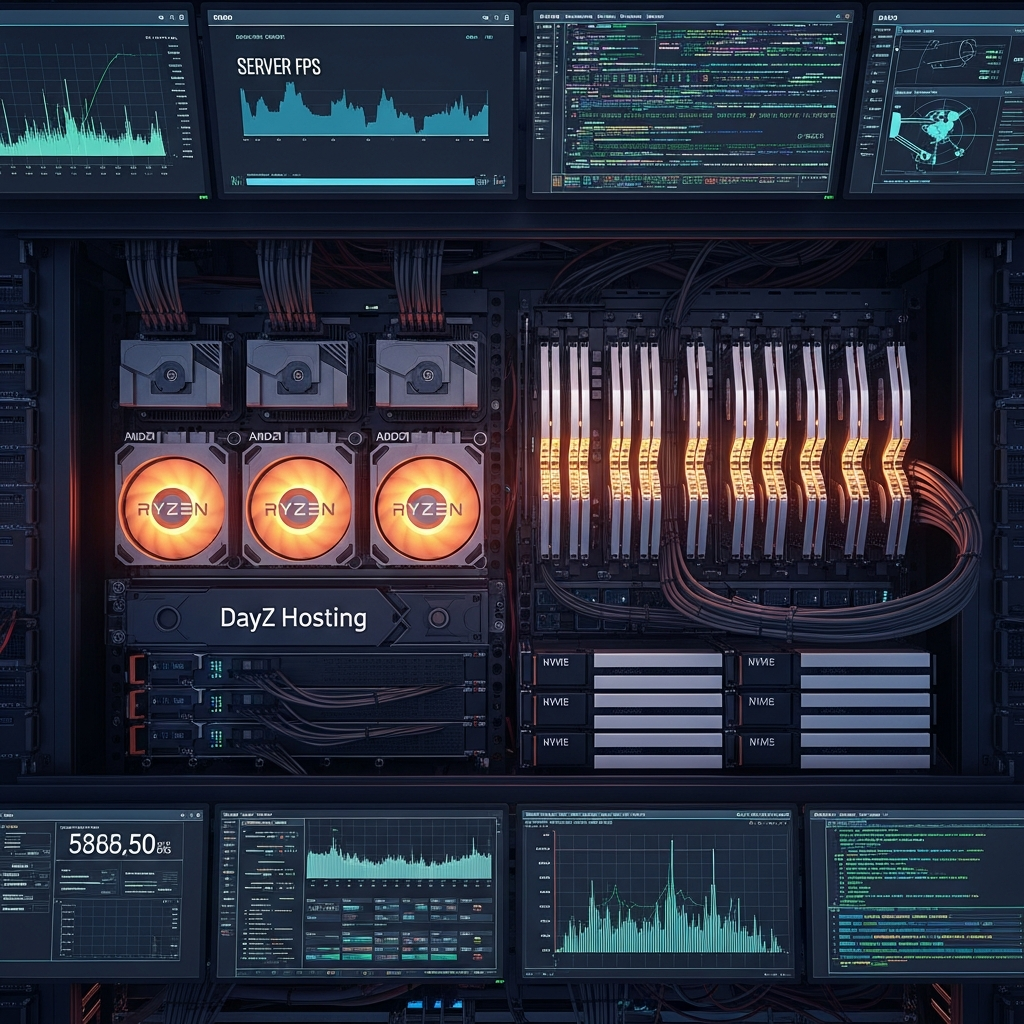
Modern hosting infrastructure—particularly the AMD Ryzen 9 7950X3D with 16 cores, 32 threads, and clock speeds exceeding 5 GHz—provides the single-thread performance DayZ’s Enfusion engine demands. Paired with DDR5 ECC RAM (32–128 GB) and NVMe SSD storage, this hardware stack eliminates common bottlenecks like slow database queries, delayed loot spawns, and AI pathfinding lag. Nexus Games leverages this exact configuration to deliver enterprise-grade DayZ hosting starting at $4.91/month, backed by Game Anti-DDoS protection and 24/7 expert support.
Key Performance Indicators for DayZ Servers
- Server FPS (tick rate): Target 30+ FPS for smooth simulation; drops below 20 cause severe desync.
- Network desync: Keep under 50 ms average to prevent position rollbacks and ghost hits.
- Memory usage: Monitor for leaks; restarts every 4–6 hours prevent cumulative degradation.
- Database query time: NVMe SSDs reduce persistence file I/O from 200+ ms to under 10 ms.
Hardware Selection: The Foundation to Optimize DayZ Server Performance
Choosing the right hardware is the single most impactful decision when you optimize DayZ server performance. The Enfusion engine is heavily reliant on single-thread CPU performance rather than core count alone, making processors with high boost clocks like the Ryzen 9 7950X3D ideal. This chip’s 3D V-Cache technology dramatically reduces memory latency for AI and simulation workloads, offering up to 30% better frame times compared to older Ryzen or Intel Xeon generations.
Processor Requirements
DayZ servers scale poorly across many cores; instead, they saturate 2–4 primary threads during peak gameplay. The 7950X3D’s 5.7 GHz boost ensures these threads execute pathfinding, loot distribution, and player synchronization without bottlenecks. Avoid older CPUs like the Ryzen 5 3600 or Intel i7-9700K—their lower IPC and clock speeds will cap your server at 15–20 FPS even with low player counts.
| Component | Minimum Spec | Recommended (Nexus Games) |
| CPU | Ryzen 5 5600X (6C/12T, 4.6 GHz) | Ryzen 9 7950X3D (16C/32T, 5.7 GHz) |
| RAM | 16 GB DDR4 2666 MHz | 32–128 GB DDR5 ECC 5200 MHz |
| Storage | SATA SSD (500 MB/s read) | NVMe Gen4 (7000 MB/s read) |
| Network | 100 Mbps unmetered | 1 Gbps + Anti-DDoS |
Memory and Storage Optimization
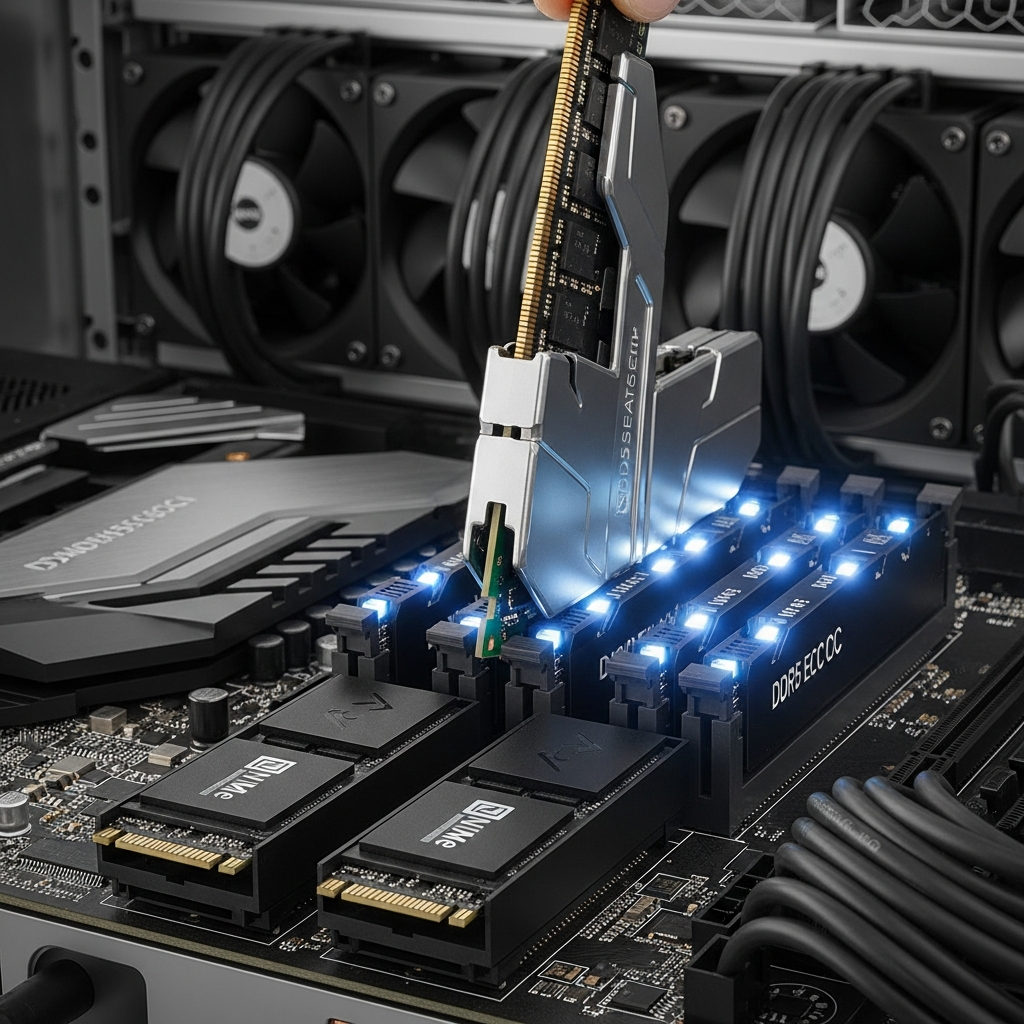
DDR5 ECC RAM prevents silent bit errors that can corrupt persistence files or cause crashes after days of uptime. Allocate at least 8 GB base + 200 MB per player slot; a 60-slot server needs 20 GB minimum. NVMe SSDs reduce database save times from 5–10 seconds (HDD) to under 1 second, preventing lag spikes during autosaves every 5 minutes.
Nexus Games provisions all DayZ servers on enterprise NVMe arrays with RAID-10 redundancy, ensuring data integrity and consistent sub-1ms access times even under heavy I/O loads. This infrastructure supports thousands of concurrent loot items, vehicle persistence, and base-building data without throttling.
Server Configuration: Fine-Tuning to Optimize DayZ Server Performance
Once your hardware is in place, configuration files determine how efficiently the server utilizes available resources. The serverDZ.cfg and init.c files control simulation fidelity, network update rates, and AI behavior—each parameter directly impacts performance and player experience.
Critical serverDZ.cfg Parameters
// Network & Simulation
maxPlayers = 60;
loginQueueConcurrentPlayers = 5;
loginQueueMaxPlayers = 500;

// Performance Tuning
networkRangeClose = 20;
networkRangeNear = 150;
networkRangeFar = 1000;
networkRangeDistantEffect = 4000;

networkObjectBatchSend = 10;
networkObjectBatchCompute = 1000;

// AI and Spawning
quantityOfZombiesMultiplier = 1.0; // Lower to 0.7–0.8 for 60+ players
lootProxySpawnReductionRadiusMax = 200;
cleanupLifetimeDeadPlayer = 1200; // 20 minutes
cleanupLifetimeDeadInfected = 900; // 15 minutes
Network Range Tuning
The networkRange parameters define how far the server sends entity updates to clients. Reducing networkRangeFar from 1000 to 800 meters cuts bandwidth by 15–20% and lowers CPU overhead for distance calculations. Players rarely engage beyond 600–700 meters, so this trade-off is negligible for gameplay quality while significantly improving server FPS on populated servers.
Zombie and Loot Spawn Optimization
Setting quantityOfZombiesMultiplier to 0.75 reduces active AI entities by 25%, directly improving pathfinding performance. Combine this with lootProxySpawnReductionRadiusMax = 200 to prevent loot explosions in military zones, which can spawn 500+ items simultaneously and tank server FPS to single digits. Use the official DayZ Server Configuration wiki as a reference for advanced parameters.
Mods and Scripts: Performance Impact Management
Popular mods like DayZ-Expansion, Trader, and Base Building Plus add immense value but can double server CPU usage if poorly optimized. Always test mods on a staging instance before production deployment. The Nexus Games panel supports one-click mod installation from Steam Workshop with automatic dependency resolution, streamlining this process.
- Avoid script-heavy mods like real-time weather syncing or complex AI schedulers—they execute every frame and degrade tick rates.
- Limit trader zones: Each trader NPC runs collision checks and inventory updates; cap at 10–15 NPCs total.
- Optimize base-building limits: Enforce maximum 50 objects per plot to prevent render/collision bottlenecks.
Automated Restarts and Maintenance
DayZ servers accumulate memory leaks and orphaned objects over 4–6 hours of runtime. Schedule automatic restarts every 4 hours with 10-minute warnings to maintain optimal performance. Use a cron job or the Nexus Games panel’s built-in scheduler:
# Example cron for 4-hour restarts (Linux)
0 */4 * * * /home/dayz/restart.sh
Pair restarts with database cleanup scripts to purge dead bodies, ruined items, and expired player data. This reduces persistence file size and speeds up load times after each restart.
Monitoring and Advanced Troubleshooting for DayZ Performance
Continuous monitoring reveals performance degradation before players notice lag. Tools like ASMX DayZ Server Monitor, Prometheus + Grafana, or the Nexus Games dashboard track server FPS, memory usage, network latency, and error logs in real-time.
Key Metrics to Watch
- Server FPS graph: Sudden drops indicate AI spawn events, mod script errors, or database locks.
- Memory trend: Steady increases suggest leaks; investigate recent mod updates or script changes.
- Network in/out: Spikes above 50 Mbps sustained may indicate DDoS attacks—ensure Anti-DDoS is active.
- CPU core usage: If core 0–1 hit 100% while others idle, the server is single-thread bottlenecked; upgrade to higher-clock CPU.
Common Performance Issues and Fixes
| Symptom | Likely Cause | Solution |
| Server FPS drops to 10–15 | Excessive zombies or loot | Reduce quantityOfZombiesMultiplier to 0.7 |
| 5-second freezes every 5 minutes | Database autosave on HDD | Migrate to NVMe SSD |
| Players desync above 40 online | Network bandwidth cap | Upgrade to 1 Gbps port |
| RAM usage climbs to 95%+ | Memory leak in mod | Isolate mod, restart every 4 hours |
Using the DayZ Logs for Diagnostics
The script.log file records errors, warnings, and performance events. Search for keywords like VME (out-of-memory), NetSync (desync), or Exceeded execution time (script timeouts). Example:
// script.log excerpt
20:15:32 | [ERROR] VME: Cannot allocate memory for 4096 zombies
20:15:33 | [WARN] NetSync: Player ID 76561198012345678 desync 120ms
20:16:01 | [WARN] Script exceeded 10ms execution: TraderNPC::Update
These logs pinpoint whether issues stem from insufficient RAM, network problems, or specific mod functions. Forward logs to Nexus Games support for expert analysis if self-diagnosis proves inconclusive.
Scaling Beyond 60 Players
Servers targeting 80–100 concurrent players require additional optimization strategies:
- Enable multi-threaded persistence: Experimental flag
-freezeCheckoffloads database writes to secondary threads. - Cluster architecture: Run multiple DayZ instances behind a load balancer for different map regions (requires advanced setup).
- Dedicated VPS for database: Offload persistence to a separate Linux KVM VPS with PostgreSQL for sub-millisecond queries.
These techniques demand deep server administration knowledge but can support 100+ players with consistent 25+ FPS. Nexus Games offers custom scaling consultations for large communities, leveraging KVM virtualization and dedicated resources to eliminate noisy-neighbor effects common on shared hosting.
Conclusion
Mastering how to optimize DayZ server performance requires balancing cutting-edge hardware like the AMD Ryzen 9 7950X3D, strategic configuration tuning, and proactive monitoring. By implementing network range adjustments, zombie spawn caps, NVMe storage, and scheduled restarts, you’ll deliver a stable 30+ FPS experience even during intense PvP and high player counts. Nexus Games provides the infrastructure, automation tools, and expert support to simplify this process, letting you focus on building your community rather than troubleshooting lag spikes.
FAQ
What server FPS should I target for optimal DayZ performance?
Aim for a consistent 30+ server FPS (tick rate) during peak hours. Drops below 20 FPS cause noticeable desync, delayed hit registration, and rubber-banding. Monitor FPS via the in-game admin tools or external monitoring dashboards, and adjust zombie/loot multipliers or network ranges if sustained drops occur. Servers with 60+ players on high-end Ryzen 9 7950X3D hardware typically maintain 25–35 FPS with proper configuration.
How often should I restart my DayZ server to maintain performance?
Schedule automatic restarts every 4 hours to clear memory leaks, orphaned objects, and cached data that accumulate during gameplay. Pair restarts with 10-minute advance warnings to players and database cleanup scripts. Servers running heavy mod loads (10+ mods) may benefit from 3-hour intervals, while vanilla servers can extend to 6 hours. Use the Nexus Games panel’s built-in scheduler for seamless automation without manual intervention.
Which mods have the biggest performance impact on DayZ servers?
Mods with real-time script execution—like dynamic weather systems, advanced AI controllers, or complex trader logic—consume significant CPU per frame. DayZ-Expansion’s AI missions and Trader mods with 20+ NPCs are common culprits. Always test mods on a staging server first, monitoring server FPS before and after installation. Limit trader NPCs to 10–15 total and avoid mods that run Update() or OnScheduledTick() functions on every entity; opt for event-driven alternatives when available.