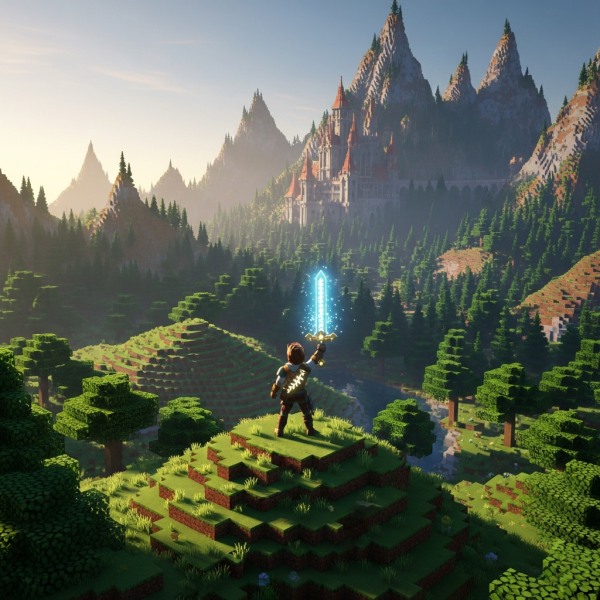
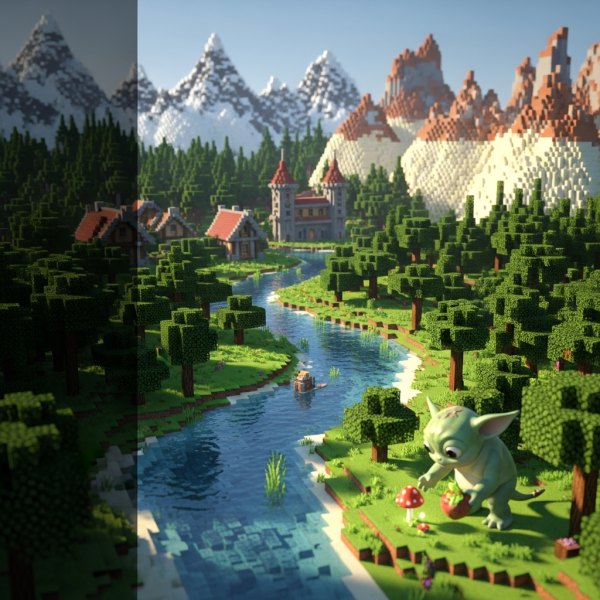
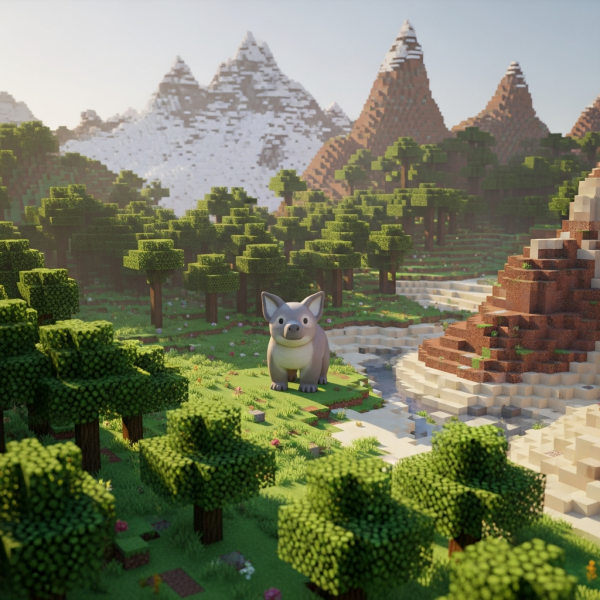
The best Hytale custom maps are set to define the gaming landscape in 2025, with community creators pushing the boundaries of what’s possible in Hypixel Studios’ highly anticipated voxel-based sandbox. As Hytale nears its release, the modding and map-making communities have already begun crafting stunning worlds, adventure maps, PvP arenas, and survival challenges that showcase the game’s unprecedented creative potential. Whether you’re planning to host these custom maps on a dedicated server or explore the top community creations, understanding what makes these maps exceptional will help you deliver unforgettable experiences to your players.
What Makes Hytale Custom Maps Revolutionary in 2025
Hytale custom maps represent a significant evolution in user-generated content for sandbox games. Unlike traditional map creation tools, Hytale’s integrated development environment provides creators with professional-grade scripting capabilities, advanced terrain generation tools, and a robust model editor that rivals commercial game development software. The best Hytale custom maps leverage these features to create experiences that feel like standalone games rather than simple modifications.
The game’s native support for custom assets means map creators can design entirely new biomes, creatures, items, and gameplay mechanics without wrestling with external modding frameworks. This accessibility has democratized game design, allowing talented creators without formal programming backgrounds to produce content that would have required entire development teams just a few years ago.
Technical Infrastructure for Hosting Custom Maps
Hosting Hytale custom maps effectively requires server infrastructure that can handle both the base game’s demands and the additional complexity introduced by custom content. Maps with extensive scripting, custom models, and large player counts benefit significantly from enterprise-grade hardware configurations.
The AMD Ryzen 9 7950X3D processor, with its 16 cores and 32 threads running at speeds up to 5 GHz, provides the computational power necessary for complex custom map logic and simultaneous player interactions. The 3D V-Cache technology specifically benefits gaming workloads by dramatically reducing memory latency, which is crucial when serving custom content to multiple players concurrently.
Memory allocation becomes particularly important with custom maps that include high-resolution textures and complex scripted events. DDR5 ECC RAM configurations starting at 32 GB provide both the capacity and error-correction capabilities needed for stable 24/7 operation. Larger maps with extensive custom assets may benefit from 64 GB or 128 GB configurations to ensure smooth performance during peak player activity.
Storage performance directly impacts map loading times and asset streaming. NVMe SSD storage delivers the random read/write performance essential for quickly serving custom map files, textures, and scripts to connecting players. This becomes especially noticeable on maps with frequent zone transitions or procedurally loaded content.
Network Considerations for Custom Content Delivery
Custom maps often include substantial additional data beyond the base game files. Players connecting to your server need to download these custom assets, making network bandwidth a critical factor. A 1 Gbps network connection ensures that even during peak connection times, players can quickly download custom content without experiencing timeouts or degraded initial loading experiences.
When evaluating hosting solutions for Hytale custom maps, look for providers offering server management through intuitive control panels. The Nexus Panel streamlines server configuration, mod management, and custom map deployment, allowing you to focus on curating content rather than wrestling with server administration tasks.
Top Hytale Community Map Categories in 2025
The Hytale community has organized custom map development into several distinct categories, each showcasing different aspects of the game’s creative potential. Understanding these categories helps server administrators curate content that aligns with their community’s preferences.
Adventure and Story-Driven Maps
Adventure maps represent some of the most ambitious Hytale custom map projects in the community. These narrative-focused experiences guide players through carefully crafted storylines complete with custom NPCs, voiced dialogue, scripted events, and progression systems that rival commercial RPGs.
Maps like Chronicles of Orbis have set new standards for storytelling in user-generated content, featuring branching questlines that adapt to player choices, custom boss encounters with unique mechanics, and fully voiced characters that bring the world to life. These maps typically require 10-20 hours to complete and often include side quests, collectibles, and hidden secrets that encourage exploration.
The technical complexity of adventure maps demands robust server infrastructure. Multiple scripted events running simultaneously, custom AI behaviors for dozens of NPC types, and persistent quest state tracking across player sessions all contribute to increased server load. Hosting these experiences on dedicated hardware ensures that dramatic story moments aren’t undermined by performance issues or server instability.
PvP and Competitive Arena Maps
Competitive Hytale custom maps focus on balanced, skill-based gameplay in controlled environments. Map creators have developed sophisticated arena designs featuring custom game modes, specialized equipment loadouts, and innovative mechanics that create emergent competitive experiences.
Popular competitive map types include:
- Team-based objective maps: Capture the flag, control point, and payload variants with custom scoring systems
- Elimination arenas: Last-player-standing formats with shrinking boundaries or environmental hazards
- Class-based combat maps: Asymmetric gameplay where different player roles counter each other strategically
- Movement-focused challenge maps: Parkour and racing maps that test precision platforming skills
The Skyward Arenas collection exemplifies competitive map design, offering perfectly balanced floating island battlegrounds with destructible terrain, custom weapon pickups, and dynamic weather systems that affect combat strategies. These maps have spawned organized tournaments and competitive leagues within the community.
Server performance becomes critical for competitive maps where millisecond timing differences affect outcomes. Low-latency server processing and consistent tick rates ensure that player actions register accurately. The combination of high-performance processors and 1 Gbps network connections minimizes the infrastructure-side contributions to latency, creating fair competitive environments.
Survival and Challenge Maps
Survival-focused custom maps reimagine Hytale’s core gameplay loop with modified rules, custom progression systems, and environmental challenges. These maps often feature hardcore difficulty settings, permadeath mechanics, or resource scarcity that fundamentally changes how players approach the game.
Frozen Wastes has become the benchmark for survival difficulty, dropping players into an unforgiving arctic environment where temperature management, limited daylight cycles, and aggressive custom creatures create constant tension. Players must balance exploration against resource consumption while building increasingly sophisticated shelter systems to survive extended stays.
Other popular survival variants include skyblock-style maps with custom progression trees, underground survival maps where players never see the surface, and apocalypse scenarios with waves of increasingly difficult enemies. These maps appeal to players seeking long-term challenges that can occupy dozens or hundreds of hours.
For server administrators, survival maps benefit from regular backup systems and potentially rollback capabilities. Given the investment players make in long-term survival worlds, robust data protection becomes essential. VPS hosting solutions with automated backup schedules provide the reliability these extended gameplay sessions demand.
Creative Showcase and Building Maps
Building-focused custom maps provide players with specialized tools, pre-generated terrain templates, and construction challenges that emphasize creativity over combat or survival. These maps often include custom block palettes, specialized building tools, and structured competitions with specific themes or constraints.
The Architect’s Dream series offers procedurally generated terrain canvases specifically designed to inspire creative building, with natural features positioned to suggest architectural possibilities. These maps include community voting systems where players can tour each other’s creations and participate in regular building competitions with different style requirements.
Plot-based creative servers have emerged as popular community gathering spaces where players claim designated building areas, often organized around specific themes—medieval districts, futuristic cityscapes, or fantasy villages. These servers foster collaborative building projects and mentorship between experienced and novice builders.
Identifying Quality Custom Maps: What to Look For
Not all Hytale custom maps deliver equal quality experiences. Server administrators curating content for their communities should evaluate several factors when selecting maps to feature.
Technical Polish and Optimization
Well-crafted maps demonstrate attention to performance optimization. Creators who understand the technical limitations of the engine implement level-of-detail systems, efficient scripting practices, and smart asset loading strategies that maintain stable frame rates even during complex scenarios.
Signs of technical quality include:
- Consistent frame rates during gameplay without stuttering or hitching
- Reasonable loading times proportional to map size and custom content volume
- Absence of visual glitches, z-fighting, or improper collision detection
- Scripted events that execute reliably without triggering multiple times or failing to activate
- Proper cleanup of temporary objects and entities to prevent memory leaks over extended play sessions
Before deploying a custom map to your production server, test it thoroughly in a development environment. Pterodactyl VPS hosting provides an ideal testing platform with easy instance management, allowing you to spin up temporary servers for map evaluation without affecting your main community server.
Design Cohesion and Player Experience
The best custom maps demonstrate clear design vision and intentionality. Every element serves the overall experience rather than being included arbitrarily. Quality maps guide players naturally through spaces using environmental storytelling, intuitive layout design, and appropriate difficulty curves.
Evaluate whether the map provides clear objectives and feedback mechanisms. Players should understand what they’re meant to accomplish and receive confirmation when they’ve succeeded. Ambiguous objectives or trial-and-error gameplay without hints frustrate players and reduce engagement.
Visual consistency matters significantly. Maps that maintain coherent art direction with appropriate color palettes, consistent architectural styles, and unified lighting create more immersive experiences than those that feel like collections of unrelated ideas.
Community Reception and Support
Active creator support distinguishes exceptional maps from abandoned projects. Creators who remain engaged with their community address bugs, balance issues, and player feedback through regular updates. Check the map’s community forums, Discord servers, or development blogs for signs of ongoing development.
Player reviews and gameplay videos provide valuable insight into how maps perform in practice. Look for consistent praise regarding specific aspects—engaging combat, clever puzzle design, atmospheric environments—rather than generic positive comments. Constructive criticism in reviews often highlights legitimate concerns worth considering.
Download statistics and community server adoption rates indicate sustained interest. Maps that consistently appear on popular community servers and maintain active player bases months after release demonstrate lasting appeal beyond initial novelty.
Compatibility and Server Requirements
Before committing to a custom map, verify its technical requirements align with your server capabilities. Some ambitious maps require specific minimum specifications that, if not met, result in degraded experiences for players.
Check whether the map includes dependencies on specific mods, plugins, or custom content packs. Maps with extensive external dependencies create maintenance overhead as those dependencies receive updates that may introduce compatibility issues. Self-contained maps with minimal external requirements generally prove more reliable for production servers.
Understanding server load characteristics helps with capacity planning. Some maps generate consistent predictable loads, while others feature periodic spikes during scripted events or when large player groups trigger simultaneous processes. Performance testing under realistic player counts prevents unexpected issues after deployment.
Hosting Best Practices for Hytale Custom Maps
Successfully hosting Hytale custom maps requires more than simply uploading files to a server. Implementing proper hosting practices ensures stable, performant experiences that keep players engaged and returning.
Server Configuration Optimization
Default server configurations rarely provide optimal performance for custom map hosting. Adjusting key parameters based on your specific map and expected player counts significantly improves the experience.
Memory allocation requires careful consideration. Allocate sufficient RAM for both the base server processes and the additional overhead introduced by custom content. A general guideline allocates 2-4 GB for the base server, plus an additional 1-2 GB per 10 concurrent players, plus overhead for custom map assets. Complex adventure maps with extensive scripting may require even more generous allocations.
Thread management settings affect how the server distributes computational work across available CPU cores. The AMD Ryzen 9 7950X3D’s multi-threaded architecture benefits from proper thread pool configuration that distributes world simulation, entity processing, and scripting execution across multiple cores efficiently.
Network buffer sizes impact how much data the server can transmit during individual network ticks. Custom maps with high-resolution textures or frequent state updates benefit from increased buffer sizes that prevent packet fragmentation and retransmission overhead.
Content Delivery and Caching Strategies
Efficient custom content delivery minimizes initial connection times and reduces bandwidth consumption. Implementing smart caching strategies ensures players download custom assets only once rather than repeatedly across sessions.
Content delivery networks (CDNs) accelerate custom asset distribution by serving files from geographically distributed locations closer to connecting players. For international communities, CDN integration can reduce download times by 50-70% compared to serving all files directly from the game server.
Client-side caching verification prevents unnecessary re-downloads of unchanged content. Implementing proper cache validation headers ensures that players who already have custom map files can connect immediately rather than re-downloading gigabytes of data after minor server updates.
Compression techniques reduce the bandwidth required for custom content transmission. Asset pipeline optimization that converts textures to efficient formats, removes unused resources, and implements appropriate compression ratios can reduce initial download sizes by 40-60% without noticeable quality loss.
Community Management and Content Curation
Successful custom map servers cultivate engaged communities around curated content collections. Rather than haphazardly adding every available map, thoughtfully selecting complementary experiences creates cohesive server identities that attract dedicated player bases.
Implement regular content rotation schedules that introduce new maps while maintaining player favorites. Rotation systems keep experiences fresh without abandoning content that retains strong engagement. Many successful servers operate on monthly or bi-monthly rotation cycles with community voting determining which new maps enter rotation.
Create clear communication channels for player feedback regarding custom map experiences. Dedicated Discord channels, in-game feedback commands, or community forums allow administrators to identify technical issues, balance problems, or content that fails to resonate with the community.
Establish consistent quality standards for maps featured on your server. Publishing clear criteria—minimum polish standards, required testing procedures, prohibited content types—sets community expectations and streamlines the evaluation process for community-submitted maps.
Performance Monitoring and Maintenance
Proactive monitoring identifies performance degradation before it affects player experiences. Implementing comprehensive monitoring systems tracks key metrics that indicate server health and custom map performance.
Essential monitoring metrics include:
| Metric | Healthy Range | Concern Threshold |
| Server tick rate | 20 TPS consistent | Below 18 TPS |
| Memory utilization | 60-80% of allocated | Above 90% sustained |
| CPU usage per core | Below 70% average | Above 85% sustained |
| Network throughput | Below 60% capacity | Above 80% sustained |
| Script execution time | Below 10ms per tick | Above 25ms per tick |
Automated alerting systems notify administrators when metrics exceed healthy thresholds, enabling rapid response to emerging issues. Integration with monitoring platforms provides historical data that reveals performance trends and capacity planning requirements.
Regular maintenance windows for server restarts, cache clearing, and database optimization prevent accumulated technical debt from degrading performance over time. Scheduling maintenance during low-traffic periods minimizes disruption while ensuring optimal conditions for peak usage times.
Backup and Disaster Recovery Planning
Custom map servers represent significant investments of time, effort, and community engagement. Comprehensive backup strategies protect against data loss from hardware failures, software bugs, or security incidents.
Implement tiered backup systems with multiple retention periods:
- Hourly snapshots: Retained for 24 hours, enabling quick rollback of recent issues
- Daily backups: Retained for one week, protecting against day-spanning problems
- Weekly archives: Retained for one month, providing extended recovery options
- Monthly long-term storage: Retained indefinitely, preserving historical server states
Test backup restoration procedures regularly to verify that backup systems function correctly when needed. Backup files that can’t be restored provide false security that fails during actual disasters.
Geographical backup distribution protects against regional failures. Storing backup copies in separate physical locations or cloud regions ensures that localized disasters—data center fires, natural disasters, infrastructure failures—don’t eliminate both primary data and backups simultaneously.
The Future of Hytale Custom Map Development
As Hytale matures through 2025 and beyond, custom map development continues evolving with increasingly sophisticated creator tools and community-driven innovations that push creative boundaries.
Emerging Creation Tools and Technologies
Third-party development tools have emerged to complement Hytale’s native creation suite. Visual scripting systems lower barriers for creators without programming backgrounds, while advanced IDE integrations provide professional developers with debugging tools, code profilers, and version control systems that streamline complex project development.
Procedural generation frameworks enable creators to design algorithmic systems that generate infinite variations of content rather than hand-crafting every element. These systems have spawned entire sub-genres of custom maps—roguelike dungeon crawlers with algorithmically generated levels, exploration maps with procedurally placed points of interest, and survival challenges with randomized resource distributions that ensure unique experiences across playthroughs.
Machine learning applications have begun appearing in custom map development. AI-assisted terrain generation tools analyze successful community maps to suggest terrain formations that feel natural and engaging. NPC behavior systems trained on player interaction data create more responsive, believable characters that adapt to individual play styles.
Cross-Server Map Experiences
Interconnected server networks enable persistent progression across multiple custom map servers. Players can carry achievements, unlocked items, or character progression between different maps hosted on separate servers within coordinated networks.
This networked approach has spawned MMO-like experiences within the custom map ecosystem. Hub servers connect players to specialized map instances—dungeon servers for combat challenges, building servers for creative construction, event servers for time-limited community activities—all while maintaining unified character progression and social systems.
Implementing cross-server architectures requires robust backend infrastructure and careful synchronization protocols. Linux VPS hosting provides the flexibility to deploy custom networking layers, database systems, and API services that coordinate state across multiple game server instances.
Monetization and Professional Map Development
As custom map quality has increased, sustainable monetization models have emerged that support professional-level content creation. Creator marketplaces, subscription services, and commissioned map development have professionalized aspects of the community previously dominated by hobbyists.
Ethical monetization systems balance creator compensation with community accessibility. Popular models include cosmetic-only purchases that don’t affect gameplay balance, optional supporter packages that provide early access or behind-the-scenes content, and donation-based funding with transparent development roadmaps.
Server administrators implementing monetized custom content should establish clear policies regarding purchased content, refund procedures, and what happens to paid content if servers close. Transparent monetization practices build community trust and reduce friction around commercial aspects of custom map hosting.
Educational and Training Applications
Custom Hytale maps have found applications beyond entertainment, with educational institutions and corporate training programs leveraging the platform for interactive learning experiences. Historical recreations teach social studies concepts, science-focused puzzle maps demonstrate physics principles, and corporate training scenarios simulate workplace situations in engaging gamified formats.
These specialized applications often require enhanced security, privacy controls, and content management capabilities beyond typical gaming servers. Enterprise-grade hosting solutions with compliance certifications, data isolation guarantees, and administrative oversight tools accommodate these specialized requirements.
The technical infrastructure supporting educational custom maps prioritizes stability and reliability over bleeding-edge performance. Consistent, predictable experiences matter more than peak performance capabilities when coordinating classroom activities or corporate training sessions with dozens of simultaneous participants.
As the best Hytale custom maps continue pushing creative boundaries throughout 2025, the infrastructure hosting these experiences must evolve alongside creator ambitions. Quality hosting solutions empower communities to fully realize the potential of custom content, transforming individual creative visions into shared experiences that define the next generation of sandbox gaming. Whether you’re curating adventure maps for a small friend group or managing large-scale competitive servers with hundreds of concurrent players, the right hosting foundation ensures that technical limitations never constrain creative possibilities.
FAQ
What server specifications do I need to host complex Hytale custom maps with 50+ players?
For hosting complex custom maps with 50+ concurrent players, you’ll need a server equipped with an AMD Ryzen 9 7950X3D processor (16 cores/32 threads) to handle the computational demands of custom scripts and simultaneous player interactions. Allocate at least 64 GB of DDR5 ECC RAM to accommodate the base server, custom map assets, and per-player memory overhead. NVMe SSD storage is essential for rapid asset loading and streaming custom content to players. A 1 Gbps network connection ensures players can quickly download custom map files during initial connection without experiencing timeouts. These specifications provide headroom for peak loads and future map complexity increases.
How do I evaluate whether a custom Hytale map is well-optimized before adding it to my server?
Test custom maps in an isolated development environment before production deployment. Monitor server tick rates during gameplay—consistent 20 TPS indicates proper optimization, while drops below 18 TPS suggest performance issues. Check memory usage patterns over 30-60 minute play sessions to identify memory leaks. Examine script execution times in server logs, with well-optimized maps keeping per-tick script execution under 10ms. Test with player counts matching your expected peak loads to reveal scalability issues. Review the map’s community forums for reported bugs or performance complaints. Use a VPS with Pterodactyl pre-installed to easily spin up temporary testing instances without affecting your production server.
What backup strategy should I implement for servers hosting custom Hytale maps with persistent player progression?
Implement a tiered backup system with hourly snapshots retained for 24 hours, daily backups retained for one week, weekly archives retained for one month, and monthly long-term backups retained indefinitely. Store backups in geographically separate locations from your primary server to protect against regional failures. For maps with player progression systems, prioritize database consistency by using proper backup procedures that ensure atomic snapshots of all related data. Test restoration procedures monthly to verify backup integrity. Automated backup systems available through quality hosting control panels eliminate manual processes and reduce the risk of missed backups during critical periods. For high-value community servers, consider real-time replication to standby servers that can assume operations if the primary server fails.