Avoiding ARK beginner mistakes is essential if you want to survive your first days on the island and build a thriving tribe. ARK: Survival Evolved and ARK: Survival Ascended are unforgiving games where one wrong decision can cost you hours of progress. In this comprehensive guide for 2025, we’ll walk you through the most common pitfalls new players face and how to sidestep them from day one.
Critical Early-Game ARK Beginner Mistakes That Cost You Hours
The first few hours in ARK set the tone for your entire playthrough. Many new players make fatal errors during character creation and initial spawning that haunt them for days. Understanding these early-game traps will save you countless respawns and frustration.
Choosing the Wrong Spawn Location
One of the most damaging ARK beginner mistakes is spawning in a hostile area. New players often select spawn points based on visual appeal rather than safety. The South Zone beaches (South 1, 2, and 3) are universally recommended for beginners because they feature abundant resources, fewer predators, and manageable temperatures. Avoid northern spawns, mountain regions, or swamp areas until you have established gear and tamed creatures.
The Footpaw, Craggs Island, and Southwest Cave spawns may look appealing but contain raptors, carnos, and other aggressive predators that will kill a naked survivor in seconds. Always research spawn locations on the official ARK wiki before committing to a region.
Neglecting Your First Shelter
Many beginners delay building their first base, thinking they can survive with temporary campfires and sleeping bags. This is a critical error. Within your first hour, you should construct a basic thatch shelter (4 foundations, 4 walls, a doorframe with door, and a roof). This protects you from small predators, weather effects, and gives you a respawn point.
Upgrade to wood structures as quickly as possible—thatch offers almost no protection against even dilophosaurs. Place your initial base near water sources, metal nodes, and abundant fiber/berries, but away from predator spawn points. A poorly placed first base forces you to relocate or constantly die, wasting valuable early-game time.

Ignoring Temperature and Fortitude
Temperature management is often overlooked by new players. Hypothermia and hyperthermia kill more beginners than predators. Your first clothing should be appropriate for your biome—cloth armor for hot areas, hide armor for cold zones. Standing near campfires, torches, or in water dramatically affects your temperature.
Invest early points into Fortitude (at least 10-15 points by level 20) to resist temperature extremes, torpor effects, and weather events. This stat is especially critical if you plan to explore caves, mountains, or tame creatures that require tranquilizers. Ignoring Fortitude is one of the sneakiest ARK beginner mistakes because the consequences aren’t immediate but become severe during boss fights and endgame content.
Taming and Creature Management Mistakes New Players Make
ARK’s taming system is complex and punishing to those who don’t understand its mechanics. Rushing into taming without preparation leads to wasted resources, dead creatures, and hours of frustration. Here’s how to avoid the most common taming errors.
Taming the Wrong Creatures First
New players often waste their first narcotics and tranq arrows on creatures that provide little early-game value. Dodos, compys, and lystros are essentially useless for progression. Your first tame should be a Parasaur or Moschops—both are easy to tame and provide significant utility. Parasaurs serve as mobile storage and early warning systems, while Moschops can be tamed passively and gather fiber efficiently.
Your second priority should be a Pteranodon for aerial mobility and scouting. Many beginners mistakenly try to tame raptors or carnos first, which require more resources, time, and preparation. Save aggressive carnivore taming until you have a proper taming pen, abundant tranq arrows (at least 50), and enough narcotics to keep them unconscious during the taming process.
Not Building a Taming Pen
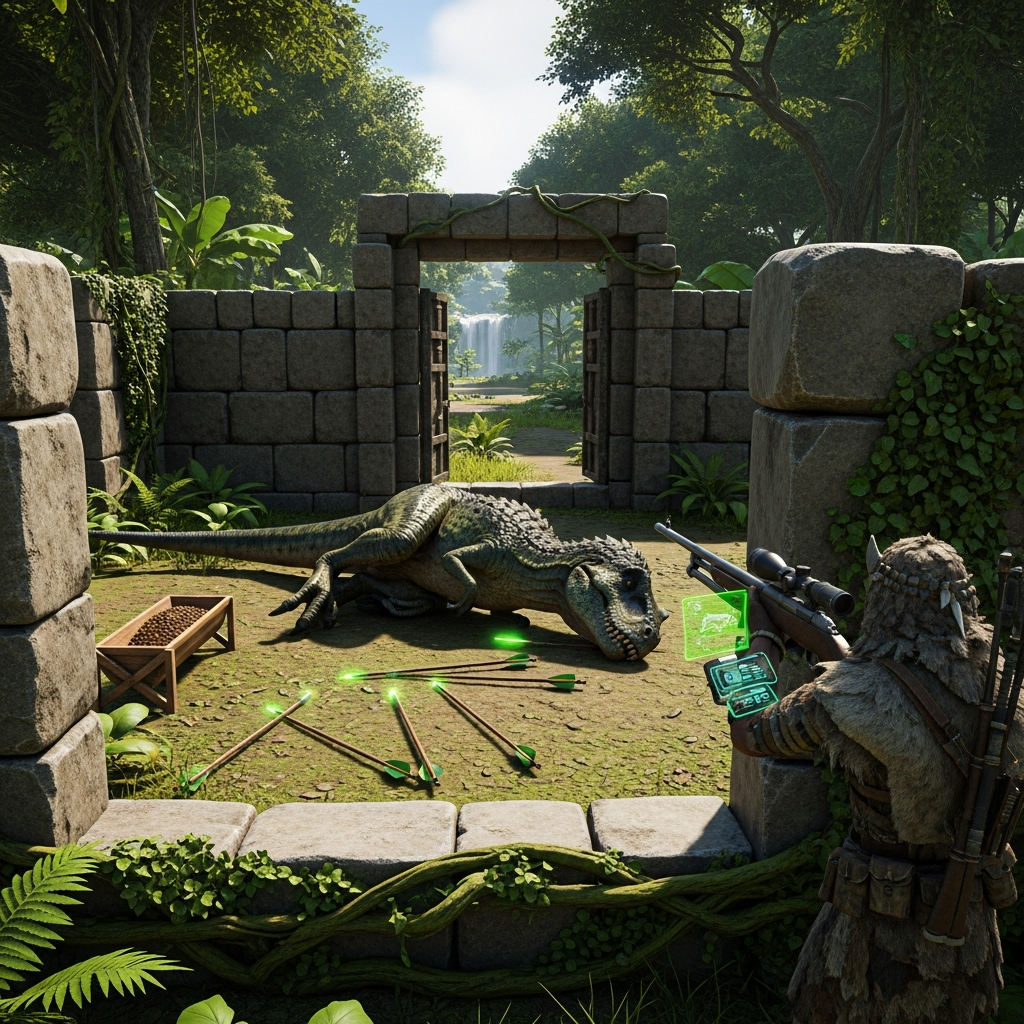
Attempting to tame creatures in the open is one of the most common ARK beginner mistakes. Wild predators will attack unconscious creatures, other players might steal your tame, and the creature itself might wake up and kill you. A basic taming pen (4×4 stone foundations, doorframe entrance, 2-high stone walls) protects your investment and makes taming significantly safer.
For flying creatures like Pteranodons and Argentavis, build a specialized trap with pillars and ceilings that allows them to fly in but not escape. For large creatures like Trikes or Brontos, create larger stone enclosures with ramps. The resources spent on taming pens pay for themselves within a single successful tame.
Misunderstanding Taming Effectiveness
Taming effectiveness directly impacts your creature’s final stats and available levels. Every time a creature takes damage or eats non-preferred food, effectiveness drops. Beginners often don’t realize that a 70% effective tame will have significantly worse stats than a 99% effective tame of the same level.
Always use preferred kibble or the highest-quality food available. For carnivores, prime meat or mutton dramatically speeds up taming and preserves effectiveness. For herbivores, use mejoberries or their specific preferred vegetables. Protect unconscious creatures from damage, use soothing balm when possible, and never let their torpor drop to zero. A poorly tamed level 50 creature is often weaker than a perfectly tamed level 30.
Failing to Manage Creature Stats and Breeding
Once you’ve successfully tamed creatures, proper stat allocation becomes critical. New players often distribute points randomly or ignore certain stats entirely. For combat mounts, prioritize Health and Melee Damage. For resource gatherers, focus on Weight and Stamina. For flyers, balance Stamina and Weight.
Never level Speed on flyers—it was disabled in most official servers. Oxygen is generally useless unless you’re specifically using aquatic creatures. As you progress into breeding, understanding mutation mechanics, stat inheritance, and imprinting becomes essential. Neglecting breeding knowledge limits your endgame progression significantly.
Resource Management and Progression Errors
Efficient resource gathering and intelligent progression choices separate successful ARK players from those who struggle for hundreds of hours. Avoid these critical resource management mistakes to accelerate your progression.
Hoarding Useless Items and Poor Inventory Management
Beginners collect everything they see, quickly becoming encumbered and unable to escape threats. Learn which resources are actually valuable at each progression stage. Early game, prioritize fiber, stone, wood, hide, and meat. Ignore rare flowers, rare mushrooms, and black pearls until you have specific crafting needs.
Build storage boxes immediately and organize them by category—one for building materials, one for food/cooking, one for armor/weapons, one for taming supplies. Use dedicated storage creatures like Parasaurs or Argentavis for mobile resource collection. Proper organization saves hours of searching through cluttered inventories.
Not Prioritizing Metal Tools and Structures
Many new players stay in stone-tier equipment far too long. Once you reach level 20, transitioning to metal tools should be your top priority. Metal picks, hatchets, and weapons are 3-4 times more efficient than stone equivalents. Metal structures provide genuine protection against raiders and large predators.
Build a small metal crafting outpost near mountain metal nodes. Smelt metal in multiple forges simultaneously to speed up production. The investment in metal infrastructure pays immediate dividends in gathering efficiency, base security, and PvP survivability. Staying in stone-tier past level 30 is a major ARK beginner mistake that severely limits your progression.
Inefficient Leveling and Engram Choices
ARK doesn’t provide enough engram points to learn everything, forcing players to specialize. Beginners often waste points on decorative items, rarely-used tools, or endgame content they won’t reach for dozens of hours. Prioritize essential survival engrams first: campfire, sleeping bag, basic structures, tools, weapons, and preserving bin.
Skip items you can easily craft with blueprints found in drops or caves. Coordinate with tribemates to specialize—one player learns cooking/farming, another focuses on weapons/armor, a third specializes in saddles and taming equipment. Solo players should use engram calculators to plan their progression path efficiently.
Underestimating the Importance of Quality Servers
Server performance dramatically impacts your ARK experience. Lag, crashes, and rollbacks waste hours of progress and make certain content impossible. When selecting a server—whether official, unofficial, or private—prioritize stability, active administration, and appropriate rates for your playstyle.
For players hosting their own servers, proper infrastructure is critical. Nexus Games ARK hosting provides dedicated resources with AMD Ryzen 9 7950X3D processors (16 cores, 5 GHz+), DDR5 ECC RAM (32-128 GB), and NVMe SSD storage. This infrastructure eliminates common performance issues like taming bugs, rubber-banding, and save corruption. The included pre-installable CurseForge mods through the control panel simplify customization without technical expertise.
Recommended Server Specifications for ARK
| Player Count | RAM Requirement | Storage | Processor Cores |
| 1-10 players | 16-32 GB DDR5 | 50-75 GB NVMe | 4-6 dedicated cores |
| 10-30 players | 32-64 GB DDR5 | 75-150 GB NVMe | 6-10 dedicated cores |
| 30-70 players | 64-128 GB DDR5 | 150-250 GB NVMe | 10-16 dedicated cores |
These specifications ensure smooth performance during peak activity, proper save file handling, and stable mod support. Inadequate hosting leads to frustrated players and abandoned servers.
Combat, PvP, and Advanced Survival Mistakes
As you progress beyond basic survival, combat competence and strategic thinking become essential. These advanced mistakes separate experienced players from perpetual victims.
Engaging in Unfavorable Combat Situations
New players consistently overestimate their combat capabilities. Attacking alpha predators with primitive weapons, challenging tribes 50 levels higher, or wandering into cave systems undergeared results in pointless deaths. Learn creature behavior patterns—when to fight, when to flee, and when to simply avoid areas entirely.
Carnivores like raptors hunt in packs and can pin you down. Therizinos have deceptive range and damage. Microraptors will dismount you from flyers instantly. Always carry bolas for small-medium threats, have escape routes planned, and travel with tamed bodyguards when exploring dangerous zones. Combat in ARK rewards preparation and strategic positioning far more than reflexes.
Poor Base Location and Security Design
In PvP servers, base location determines your survival odds. Building on beaches, near obelisks, or in high-traffic areas guarantees you’ll be raided. Hidden bases in dense forests, underwater locations, or cave systems provide better security. However, caves have specific restrictions and spawn points that can be exploited.
Design bases with multiple defensive layers—outer walls with turrets, inner vaults for valuables, and decoy structures to waste raiders’ resources. Never store all resources in one location. Use small hidden stashes scattered across the map to preserve critical items if your main base falls. Proper turret placement, blind spot elimination, and offline raid protection (ORP) configuration are essential in PvP environments.
Ignoring the Importance of Information and Community
ARK’s complexity means solo learning takes exponentially longer than leveraging community knowledge. Join Discord servers, watch current guides (ARK meta changes frequently), and participate in community forums. Many ARK beginner mistakes can be avoided entirely by asking experienced players before attempting risky actions.
Stay updated on patch notes—balance changes often invalidate previous strategies. Breeding lines, boss requirements, and PvP meta shift with each major update. Following content creators who specialize in ARK ensures you’re using current information rather than outdated 2020 guides that no longer apply in 2025.
In conclusion, avoiding ARK beginner mistakes requires understanding game systems, planning your actions, and learning from experienced players. Focus on safe spawn locations, efficient early-game progression, proper taming mechanics, resource management, and strategic combat decisions. With proper preparation and infrastructure—whether through quality hosting solutions or community support—you’ll transition from vulnerable beach bob to dominant survivor far faster than trial-and-error learning alone.
FAQ
What are the most critical early game engrams to unlock first in ARK?
Prioritize the campfire, sleeping bag, spear, pickaxe, hatchet, and thatch structures first. By level 10, unlock the mortar and pestle, bola, and bow with arrows. Level 15 should focus on stone structures, preserving bin, and narcotics. Level 20 requires metal tools, smithy, and forge. These engrams form the foundation for all mid-game progression and taming activities.
How do I protect my tames from dying while I’m offline?
Set all non-combat tames to passive and keep them inside enclosed structures with doors. Use the “Enable Wandering” option only for creatures that need it (like dung beetles or Ovis). Create a dedicated barn or stable with thick walls and multiple compartments. For critical tames, use cryopods to store them safely in vaults when you log off. In PvP, hide valuable tames in secret locations separate from your main base to prevent total loss during raids.
What server settings should I adjust to reduce beginner frustration?
Increase taming speed to 3-5x, harvesting rates to 2-3x, and XP gain to 2x for a more forgiving learning experience. Enable “Allow Cave Building” if you want more base location options. Disable “Friendly Fire” for tribes to prevent accidental tame kills. Reduce egg hatching time and maturation speed significantly (10-15x) if you plan to breed creatures. Set “Difficulty” to 5.0 for maximum wild creature levels (150). These adjustments maintain ARK’s challenge while removing the most tedious time sinks that frustrate new players.