Learning how to create a secret passage in Minecraft opens up endless possibilities for hidden rooms, secure vaults, and imaginative bases that wow your friends. Whether you’re playing on a private server hosted through Nexus Games or in single-player mode, mastering concealed entrances transforms your builds from ordinary to extraordinary. This comprehensive 2025 guide covers piston doors, painting tricks, bookshelf passages, and redstone-powered mechanisms that keep your treasures safe and your builds immersive.
Why Build Secret Passages in Minecraft?
Secret passages serve multiple purposes beyond aesthetics. They protect valuable loot from other players on multiplayer servers, create surprise elements in adventure maps, and add layers of storytelling to your builds. On dedicated Minecraft servers powered by AMD Ryzen 9 7950X3D processors, complex redstone circuits run smoothly without lag, making elaborate hidden door systems practical even on busy community servers.
Hidden entrances also challenge your engineering skills. Designing a seamless secret passage requires understanding block mechanics, redstone logic, and spatial planning. The satisfaction of watching a wall open silently while leaving no visible trace makes the effort worthwhile. Plus, secret passages discourage griefing since raiders won’t find your storage rooms easily.
Types of Secret Passages
- Piston doors: Walls that retract using sticky pistons and redstone circuits
- Painting passages: Simple hidden doorways covered by paintings
- Bookshelf doors: Rotating bookcase entrances that blend with libraries
- Floor hatches: Trapdoors concealed under carpets or grass blocks
- Water elevators: Hidden vertical passages using bubble columns
- Nether portal tricks: Portals hidden behind movable walls
Basic Secret Passage: The Painting Door Method
The painting door represents the simplest secret passage technique, perfect for beginners. This method requires minimal resources and no redstone knowledge, making it accessible within your first Minecraft days.
Materials Needed
- 6-8 signs (any wood type)
- 1 painting (any size that covers a 2-block-tall space)
- Building blocks matching your wall
Step-by-Step Construction
First, create a doorway in your wall that’s two blocks tall and one block wide. Place signs on both sides of the opening, stacking them vertically to fill the entire 2-block height. Signs create invisible barriers players can walk through while providing surfaces for paintings.
Hang a painting on the signs covering your doorway. Select a painting size that naturally fits your wall design—larger paintings like the 4×4 “Wasteland” work for spacious halls, while 2×2 paintings suit cozy bases. Walk through the painting to access your hidden room. Other players see only wall decoration, not a passageway.
Pro Tips for Painting Passages
Disguise your secret passage by surrounding it with multiple paintings in a gallery arrangement. This camouflage prevents the hidden entrance from standing out. Place valuable-looking chests in plain sight to divert attention from your concealed storage. On multiplayer servers with NVMe SSD storage like those from Nexus Games, world data loads instantly, so players won’t notice block lag when you pass through paintings.
Intermediate Technique: Sticky Piston Door Systems
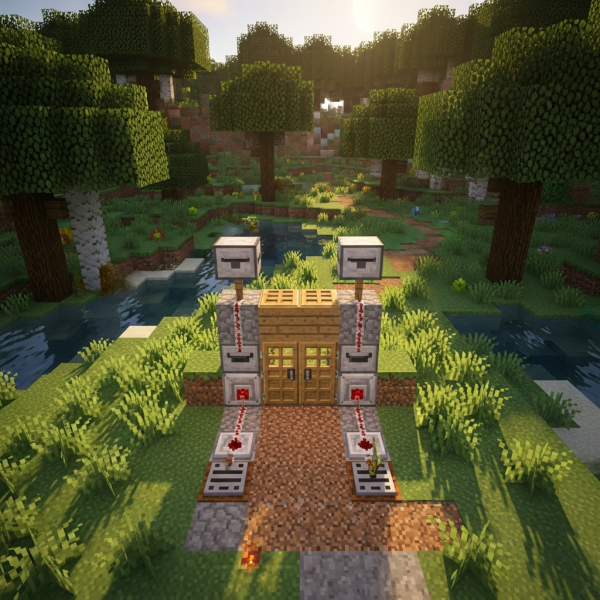
Piston doors offer robust security and impressive visual effects. These mechanisms use redstone to push blocks aside, creating seamless wall openings that close automatically. Sticky pistons pull blocks back into position, leaving no gaps.
Materials for a 2×2 Piston Door
| Component | Quantity |
| Sticky pistons | 4 |
| Redstone dust | 16-20 |
| Redstone torches | 4 |
| Lever or button | 1 |
| Building blocks | 24 |
| Repeaters | 2-4 |
Building the Circuit
Dig a 5×5 area behind your wall, going 3 blocks deep. Position four sticky pistons facing the wall opening, arranged in a 2×2 grid. Behind each piston, place a block that matches your wall material—these become the moving door sections.
Create a redstone circuit connecting all pistons to a single input (lever or pressure plate). Use redstone repeaters to synchronize piston timing, ensuring all four blocks move simultaneously. Run redstone dust from your activation point to each piston, using torches to invert signals where needed.
Layer 1 (Bottom):
[Redstone] [Torch] [Block]
[Repeater] [Dust] [Piston]

Layer 2 (Top):
[Block] [Dust] [Piston]
[Lever] [Repeater] [Block]
Hiding the Activation Mechanism
Conceal your door trigger using these methods:
- Item frame button: Place a lever behind an item frame showing a specific item
- Hidden pressure plate: Bury a weighted pressure plate under carpet near the door
- Redstone torch key: Create a pattern where placing torches in specific locations opens the door
- Daylight sensor timer: Program the door to open only at certain times
On servers with 1 Gbps bandwidth and DDR5 ECC RAM like Nexus Games provides, redstone circuits execute instantly even with dozens of components, enabling complex multi-layer security systems without performance drops.
Advanced Secret Passages: Bookshelf Doors and Floor Entrances
Advanced builders create secret passages that appear completely natural, blending perfectly with surrounding architecture. Bookshelf doors and floor hatches exemplify this mastery, requiring precise measurements and creative redstone application.
Rotating Bookshelf Passage
This design creates a bookshelf section that rotates open, revealing a hidden staircase or room. The mechanism uses fence gates and clever block placement to simulate rotation while actually sliding blocks sideways.
Build a wall of bookshelves with one section designated as your door. Behind this section, construct a piston mechanism that pushes the bookshelves aside horizontally. Add fence gates along the passage edges—when opened, they create the illusion of depth and rotation. Place carpets on the floor leading to your passage to muffle footstep sounds.
Materials Required
- 24 bookshelves (or book-matched blocks)
- 6 sticky pistons
- 8 fence gates
- 20 redstone dust
- 4 observers (for automatic closure)
- 2 droppers with items (for weighted activation)
Concealed Floor Hatch with Carpet
Floor hatches provide vertical secret passages leading to underground bases. Trapdoors placed flush with the floor and covered by carpets become invisible, opening downward when triggered.
Dig a 3×3 shaft descending to your hidden chamber. At floor level, place trapdoors across the opening. Cover trapdoors with carpets (carpets sit on top without blocking trapdoor function). Connect a hidden redstone line to a nearby “trigger” block—stepping on a specific carpet tile opens the hatch below.
Water Elevator Integration
Combine your floor hatch with a water elevator for rapid vertical transport:
- Place soul sand at the bottom of your shaft for upward bubble columns
- Fill the shaft with water source blocks using kelp placement and removal
- At the top, position your trapdoor hatch system
- Add magma blocks on a parallel shaft for downward transport
This creates a two-way hidden passage system perfect for multi-level bases. When hosting on servers with Pterodactyl panel integration, you can easily manage world backups before testing complex water mechanics, preventing accidental flooding disasters.
Redstone Logic for Multi-Stage Secret Passages
Expert builders create secret passages requiring multiple steps to unlock, preventing accidental discovery. These systems use combination locks, sequential button presses, or item-based keys that only knowledgeable players can activate.
Combination Lock System
Design a lock requiring levers in specific positions before the door opens. Use four levers connected through AND gates (redstone logic that requires all inputs active simultaneously). Only the correct combination powers the door mechanism.
Lever positions for unlock:
Lever 1: ON
Lever 2: OFF
Lever 3: ON
Lever 4: ON

Wrong combinations trigger nothing
Correct combination activates sticky pistons
Item Frame Password
Create a system where item frames must display specific items in correct rotation positions to open your passage. Use comparators to detect item frame states, routing signals through AND gates. This method produces a “password” system with 64 possible combinations per frame (8 items × 8 rotation states).
Implementation Steps
- Place 3-5 item frames on your wall near the hidden door
- Behind each frame, position a comparator detecting its state
- Route comparator outputs to a central AND gate circuit
- Connect the AND gate output to your door pistons
- Set your “password” by placing specific items at specific rotations
Document your password separately—forgetting the combination locks you out permanently unless you break blocks to reset the system. On Nexus Games servers running on NVMe SSDs, you can create backups before implementing complex locks, allowing safe experimentation.
Timed Sequence Lock
Build a passage that opens only when buttons are pressed in correct sequence with proper timing. Use repeaters and comparators to create a memory circuit that tracks button presses. Incorrect sequences reset the system, requiring players to start over.
This advanced technique combines game mechanics knowledge with logical thinking. Place five buttons on a wall, each connected to specific delay circuits. Pressing buttons 1-3-5 in that order within 10 seconds opens the door, while any other sequence does nothing. Add a visual indicator using redstone lamps that light up with correct presses, providing feedback without revealing the pattern.
Optimizing Secret Passages for Multiplayer Servers
Building secret passages on multiplayer servers introduces unique challenges. Other players actively search for hidden rooms, lag can affect redstone timing, and grief protection plugins may interfere with certain mechanisms.
Server-Friendly Design Principles
Choose simple, reliable circuits over complex systems prone to lag-induced failures. Sticky piston doors with basic lever activation perform consistently even during server load spikes. Avoid excessive redstone dust lines extending over 15 blocks, as long circuits can create performance issues on busy servers.
When playing on Nexus Games Minecraft servers powered by 16-core AMD Ryzen 9 7950X3D processors, even elaborate redstone networks run smoothly. However, design with efficiency in mind—use observers instead of redstone clocks where possible, reducing constant block updates that strain server resources.
Protection Plugin Compatibility
Most grief protection plugins track block changes within claimed land. Ensure your secret passage mechanisms reside entirely within your protected area. Test piston doors after claiming land, as some plugins restrict piston movement across claim boundaries. Configure your claim permissions to prevent other players from interacting with levers or buttons that might activate your hidden doors.
Anti-X-Ray Considerations
Players using x-ray texture packs or mods can see through walls, spotting your hidden rooms easily. Combat this by:
- Building decoy rooms with fake treasure near your secret passages
- Using obsidian or bedrock-textured blocks that x-ray mods often hide
- Surrounding your secret room with water or lava (appears solid in x-ray)
- Playing on servers with anti-cheat plugins that detect x-ray usage
Reputable hosts like Nexus Games provide server management tools through their custom panel, making it easy to install anti-cheat plugins that protect against unfair advantages. Their DDR5 ECC RAM ensures plugin performance doesn’t compromise server speed.
Backup Your Builds
Before constructing complex secret passages on a server, create a world download or use structure blocks to save your design. If griefing occurs or mechanisms break due to updates, you can restore your work quickly. Server hosts offering automatic backups provide additional peace of mind—check if your provider includes scheduled world saves in their hosting package.
Creative Secret Passage Ideas for 2025
Push beyond basic hidden doors with these innovative secret passage concepts that showcase advanced building techniques and game mechanic mastery.
Villager Trading Hall Entrance
Disguise your secret passage entrance within a villager trading hall. Build a false wall behind a row of villager workstations. When you place a specific item in a hopper connected to your door circuit, the wall retracts. This design hides the entrance in plain sight while serving a functional purpose.
Enchantment Table Portal
Create a secret passage that opens when you place a book on an enchantment table. Use a dropper system beneath the table connected to comparators detecting when an item is placed. The door mechanism activates briefly, then auto-closes after a set delay, ensuring the passage doesn’t remain open.
Musical Lock System
Note blocks create unique sounds when played. Design a lock requiring a specific melody—four note blocks played in sequence with correct pitches. Use comparators to detect note block frequencies, routing signals through a memory circuit that tracks the melody progression. Only the correct song unlocks your passage.
Implementation Tips
Note Block Setup:
Block 1: F# (10 clicks)
Block 2: A (12 clicks)
Block 3: D (5 clicks)
Block 4: G (8 clicks)

Playing this sequence in order opens door
Wrong notes reset the circuit
Minecart Station Secret Exit
Build a minecart transportation hub with one track leading to a secret exit. Use powered rails with detector rails that activate only when a minecart contains a player holding a specific item (detected through weighted pressure plates at departure). This creates a passage accessible only to informed players who know to bring the “key” item.
Armor Stand Statue Passage
Craft a decorative armor stand statue that rotates when interacted with (using invisible armor stands and clever positioning). Behind the statue, hide a door mechanism that opens when the statue reaches a specific rotation. This creates an immersive, puzzle-like secret passage perfect for adventure maps.
These advanced designs benefit from stable server performance. When hosting on infrastructure with 1 Gbps bandwidth and enterprise-grade NVMe storage, complex mechanisms involving multiple entity interactions run without stuttering, creating smooth, cinematic reveals for your hidden passages.
Troubleshooting Common Secret Passage Problems
Even experienced builders encounter issues when constructing secret passages. Understanding common problems and their solutions saves hours of frustration.
Pistons Won’t Retract Completely
Sticky pistons sometimes fail to pull blocks back due to slime block interference or improper power timing. Ensure each piston receives exactly 1 redstone tick of power followed by a complete power-off state. Use repeaters set to 2-tick delays between piston activations if multiple pistons share a circuit.
Redstone Signals Bleeding Through Walls
Redstone power can travel through solid blocks, accidentally triggering hidden mechanisms. Isolate your circuits using non-conductive blocks like glass or leaves between redstone lines and external areas. Check that no dust touches blocks adjacent to your secret passage exterior.
Debug Checklist
- Test each piston individually before connecting to main circuit
- Verify all repeaters face the correct direction (indicated by arrow)
- Replace any redstone dust lines longer than 15 blocks with repeaters
- Ensure sticky pistons have slime balls (crafted with slime + piston)
- Check that observers face the correct direction (indicated by face)
Door Opens But Won’t Close
This issue stems from inverted logic or missing return signals. Pistons need both extension and retraction signals. If using a lever, ensure it sends power when both on and off. For button-activated doors, add a separate circuit that automatically powers pistons to close after a delay (using repeaters set to maximum 4-tick delay chained together).
Passage Works in Creative But Fails in Survival
Game mode differences rarely affect redstone, but chunk loading does. If your secret passage mechanism spans multiple chunks, parts may not load simultaneously in survival mode, causing timing failures. Keep entire circuits within a single chunk (check boundaries with F3+G debug screen), or add chunk loaders on multiplayer servers that support them.
Server performance also impacts redstone consistency. Lag spikes can cause pistons to misfire or signals to arrive out of sequence. Quality hosting with dedicated resources prevents these issues—servers built on AMD Ryzen 9 7950X3D processors deliver reliable tick rates even under load, ensuring your secret passages function flawlessly regardless of player count.
Creating a secret passage in Minecraft combines technical skill, creative vision, and understanding of game mechanics to produce builds that surprise and delight. From simple painting doors to elaborate multi-stage combination locks, hidden passages add depth and security to your Minecraft experience. Whether you’re protecting valuables on a multiplayer server or designing an immersive adventure map, mastering these techniques elevates your building portfolio. Remember to host your creations on reliable infrastructure that supports complex redstone without performance compromises, ensuring your secret passages remain hidden and functional for years to come.
FAQ
What’s the most lag-resistant secret passage design for multiplayer servers?
Simple sticky piston doors with direct lever activation create the most reliable secret passages on multiplayer servers. Avoid complex clock circuits or excessive observer chains that generate constant block updates. Keep redstone lines under 15 blocks and use repeaters to boost signals. This design works consistently even during server load spikes, and on quality hosting with DDR5 ECC RAM and modern processors, even moderately complex circuits run smoothly without timing issues.
Can other players find my secret passage using F3 debug screen?
The F3 debug screen shows coordinates and block information but doesn’t reveal hidden passages directly. However, players can notice inconsistencies like air pockets behind walls by carefully checking block data. To prevent detection, ensure your secret room’s outer walls match surrounding architecture perfectly. Fill gaps with solid blocks rather than leaving air spaces, and build decoy rooms at similar depths to mask your actual hidden chamber from systematic coordinate checking.
How do I make my secret passage work with grief protection plugins?
Ensure all components of your secret passage—pistons, redstone circuits, and activation mechanisms—exist entirely within your protected claim area. Test the door after claiming land, as some plugins restrict piston movement across boundaries. Configure claim permissions to prevent other players from using buttons or levers near your passage. Most modern protection plugins allow pistons within claims by default, but verify settings through your server’s management panel or by consulting documentation for plugins like GriefPrevention or WorldGuard.